Panning for Gold: Holding the Impossible
If you’re wondering how to support an EMT you love after a hard shift, this essay and care package are here to hold space for you as you bear witness to what lingers after the call.
A quick map of what’s here
What this is: a collage-essay written by the mom of an EMT who, for a season, has had the honor of bearing witness and accompanying in spacious with-ness. A story about holding pain and love together.
Rocks and sand: glimpses of what lingers after the call, and how the body holds it until there is space and witness.
Glimmers of gold: micro-glimpses of felt connection are held in the body, too. Savoring these glimmers restores life and color.
How we hold it: Hold Polarities with Max, the heart of this essay.
When it hits close to home: in a tender conversation at the kitchen table, we time-travel together.
A blessing + playlist + care package: words, songs, and videos to accompany you as you make your way.
A note about content: This post weaves lived EMT experience and touches on trauma and suicide. Please take care and take your time. If you can’t read about hard things right now, that’s understandable. Save it for later or skip it.
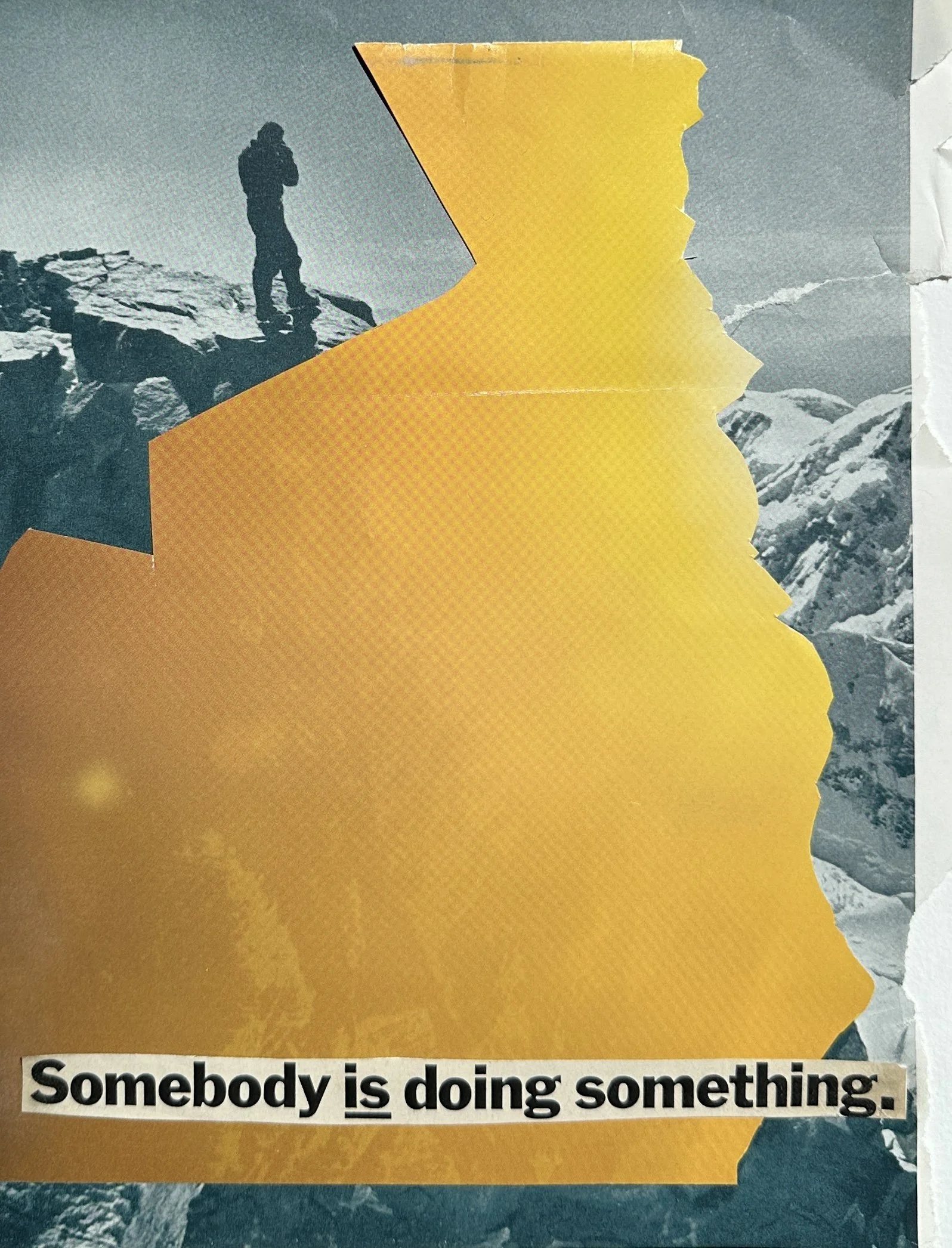
This is a story about pain and love. I find it nourishing and important to speak directly to the weight of our collective moment and to share lived experiences of holding it, particularly.
Let’s ease into the story with a two-minute video about panning for gold
“See the darkness, know it’s real … light a candle anyway.”
—Sarah Bessey
We got a family tattoo while all of the kids were home this year.
Each of us has endured at least one season of very low firelight when our spark was nearly extinguished. Each of us has taken turns holding the light. Because we know encountering darkness is a part of being human, we engraved a reminder of the ever-present reality of light on our skin.
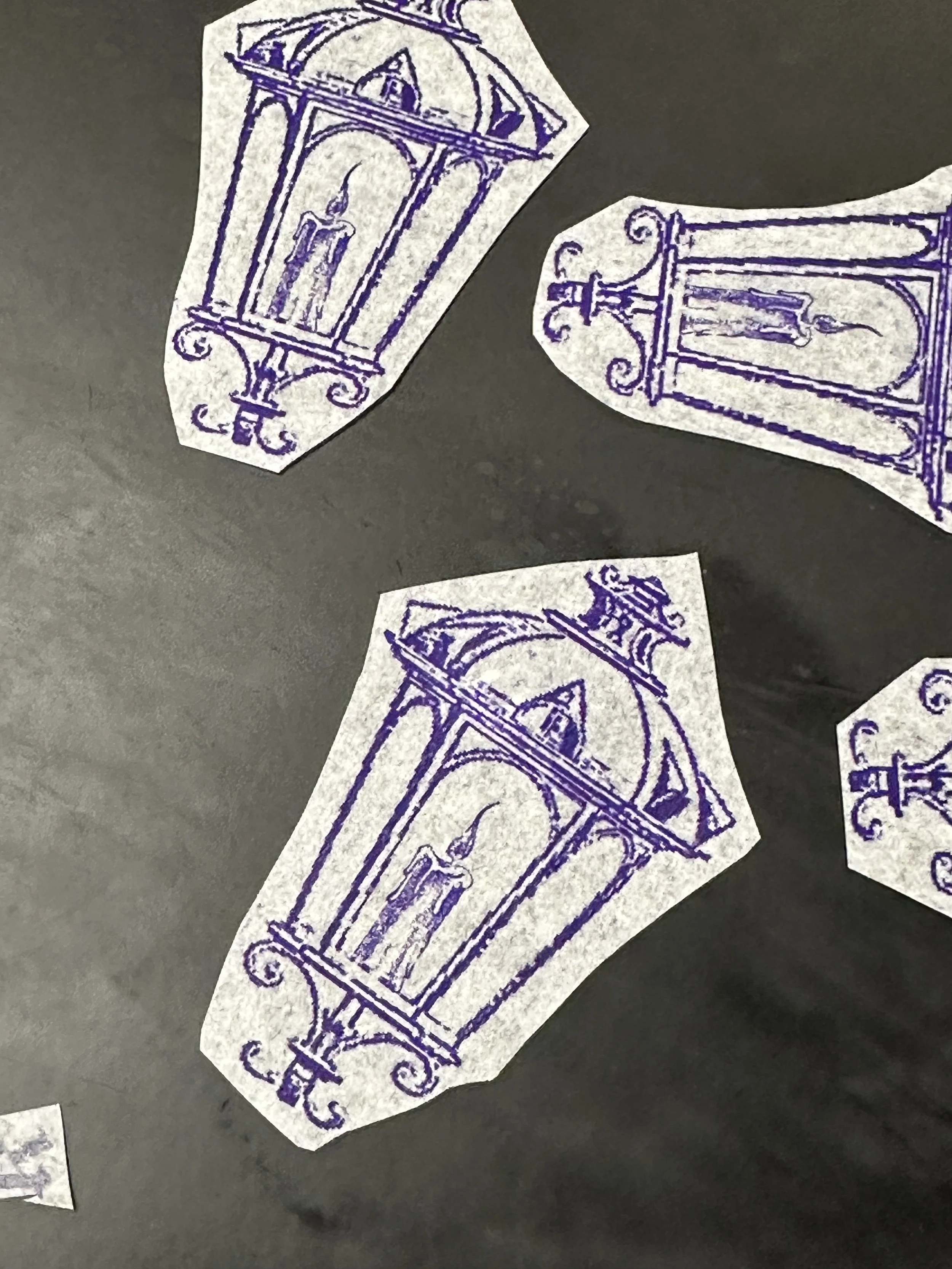
“It is the light in the lantern which shows you the path, not the lantern.”
-A Yogi Tea Quote
Speaking about hope is no simple thing, especially in this moment of great collective uncertainty. How does one use words to describe what can only be truly known from the inside?
Because any spiritual perspective I offer these folks I parent will be anemic if it doesn’t speak to their realities honestly, I’ve gone back to the drawing board over and over— learning and excavating, following what I sensed, but could not yet say spaciously.
More vitally, though, I’ve had to cultivate the inner stability to be WITH them.
Micro-Dosing Human Tragedy
Until I saw what it is like for my son Ryan to face the unimaginable in his role as an EMT, I did not understand the gravity of suffering our first responders bear witness to as they enter into the worst moments of our lives. It is the call they carry on our behalf.
Severe injuries are not the heaviest weight. It is the steady micro-dosing of human tragedy that wearies the soul.
“We begin to understand God as the presence that protects us from nothing, even as God unexplainably sustains us in all things.”
– Dr. James Finley
When I first heard these honest, poetic words, a knot within me loosened. This is the first description of God I have found robust enough to truly take comfort in, and it is one I boldly whisper to the hearts of folks that I love.
As I share Dr. Finley’s words with Ryan (words that have been helping me reconcile a loving God with the reality of suffering), I see something shift; he is taken aback, and then still for what seems like a full minute.
Another EMT pours out words to fellow stretcher-bearers that his family and friends cannot witness. After responding to a horrific domestic violence call, he said, “There is no God.”
Because bearing the weight of tragedy alone drains the color out of Ryan’s life, we hold it together.
Being Present to the Rocks and Sand of Suffering
Without violating HIPAA, Ryan recounts residue he is presently carrying but has not yet felt.
These are a few glimpses of what can linger after the call.
Ryan revives a nearly lifeless body on the street with Narcan and gets the now stable patient into the ambulance. Then hears cries for help. Another soul has overdosed one block over, and won’t make it until the next ambulance arrives. Regulations prohibit what he knows he must do.
“He will die if you don’t do something… and it will be on you!” is seared into a first responder’s memory. This is not the first time a hurting human has yelled these words in Ryan’s direction, and it will not be the last. He makes an impossible split-second decision. The resuscitated patient will be safe with his partner. He listens to the inner voice and throws a starfish back into the ocean.
Ryan climbs through wires and debris to reach a second-story apartment. A sick woman has delayed care as long as she possibly can because she is a caregiver for a non-ambulatory spouse with dementia. They do not have a backup plan. No one is coming to save them from this chronic emergency.
Some residue is obviously catastrophic. Some looks ordinary from the outside. To Ryan, it’s often the ordinary moments that land as more distressing and disorienting in his body.
Seemingly innocuous instances not felt in the moment are released on a drip once Ryan clocks out. He is cursed at, spat on, bitten, and occasionally even hit on. Early in his career, he was “sucker punched” in the face by the partner of a patient he was actively caring for. Any one of these dehumanizing assaults would be shocking to many of us, but they are not at all unusual to a first responder.
On his way home from a twelve-hour shift holding space for strangers on their worst day, an angry driver flips Ryan off when he doesn’t immediately accelerate at a green light. This is the most isolating moment of the day.
A small pause. What do you notice in your body at this point in the story? What is it like on the inside? Whatever is here is welcome. Feel free to take a break and return when you’re ready.
A Fresh Reminder of Human Vulnerability
The advanced life support calls are heavy, too.
Ryan and six other first responders are dispatched for CPR. The patient’s family looks on expectantly while the team moves in harmony. Each one gives attention to the part they are playing, and to the flow between them. When they silently recognize further efforts will not be life-saving, they shift seamlessly toward dignity for the deceased and compassionate care for this family.
In the moment between that recognition and the life-altering news being delivered, Ryan notices smiling eyes, life, and breath in family photos on the wall. Someone’s brother or mom. A child who will never grow up. A father whose young kids may not remember him.
Ryan anticipates the medic’s next move and gets a blanket from the rig. He gathers trash and moves furniture back into place. From one moment to the literal next, life as this family knows it will never be the same.
The ride home is silent. Back at the station, they stay in motion, quietly cleaning and restocking supplies for the next call. The air is thick with a fresh reminder of just how fragile life is.
Someone asks, “What’s for dinner?”
Glimmers of Gold
As we sift through the rocks and sand of suffering, glimmers of gold catch Ryan’s heart’s eye. Pain is not the only story. It may not even be the truest story.
Because we know negative experiences stick to us like Velcro and positive ones slip off like Teflon, we savor the heck out of gold.
An unhoused couple knocks on the window of the ambulance. The husband is in pain and needs care. He is not dying, but unattended, he will get very ill and could lose a finger or a hand. They kindly decline emergency transport and say they will walk to the hospital. It is 2:00 AM in below-freezing temperatures.
Ryan watches them walk away without spite or complaint. They do not brace against what is, and they have no expectation of him in that moment. As they set out on the two-mile trek, everything in him screams, “You have to do something!” He phones his supervisor to ask if he can give them a ride, and his request is met with compassion. Front-door service to the hospital is offered and accepted.
Ryan buckles each of them in and carefully lifts everything they own into the aid car like the precious parcels they are.
Later, as Ryan posts up in a parking lot between calls, he sees a man lying on the ground. He walks over to ask if he’s okay.
“Yes,” comes a reply. “I am just resting.”
Another man sees this anomalous decency from a bench across the street and calls to Ryan, “Thank you for checking on him. My wife died of an overdose. I’ve overdosed twenty-two times, but I have been clean for two years now.”
Ryan picks up the phone when a co-worker reaches out to share an experience of a call so devastating it is barely bearable. Ryan knows what this is like. He knows the sensation of circling back through each moment to see if there’s anything he could have done differently, and to feel shock and anger, and to feel alone in his pain.
This may not sound like gold quite yet, but let me thread this needle for you. It is a very particular type of witness that is needed in these searing moments of moral injury. Ryan has everything he needs to hold space for his colleague tonight. He has lived through similar circumstances, gleaned wisdom from veteran EMTs and paramedics, and has enough distance from this situation to see clearly.
Ryan validates this EMT’s disorientation and clearly states his grounded orientation. He will continue to be available anytime, anywhere. He speaks truth with compassion and deep seriousness. This felt experience of holding the light for another EMT is like taking a deep swig of gold.
The Felt Sense of Gold
The felt sense of gold is hauntingly sweet, heart-wrenchingly full of life. I want to bottle it up and spray the scent of gold all over the planet with reckless abandon.
What a wonder that we can drink this gold even when we aren’t cognizant of its existence in the moment. We can tune in later to the aliveness it arouses at the core of our being.
If each of us is a drop in the same vast ocean, could there also be a fleck of gold within that becomes perceptible only in the flow of resonance between us?
Given how hard life is, it makes sense that we fall asleep to this oneness. The life Ryan experiences while listening to Tool has stirred recognition. In “Pneuma,” they plead with us:
“Wake up and remember.”
“Through mechanical love, we all suffer. Conscious love heals us.”
— Maurice Nicoll
When Suffering Hits Close to Home
I picked up burritos for dinner last winter when Ryan and I were at home together. At the kitchen table, we dropped into a conversation that neither of us will ever forget.
Earlier in the week, Ryan was dispatched to the home of a young mother. It is not uncommon for EMTs to care for people whose acts of desperation did not bring an end to their suffering.
Her despair rose to an unbearable level. The only relief she could imagine was to no longer exist. She tried to end her life while her baby slept in the next room.
On the way to the hospital, physical pain was eclipsed by the emotional agony and shame of a choice made in the darkest moment.
That night in the ambulance, Ryan held back tears. This was not his emergency. He offered medical care, compassionate witness, and words of comfort.
As he tells me about it, we enter tender territory. I ask him if he remembers.
Seventeen years earlier, after more toxic stress than my body could bear, I was on the threshold of letting go. I didn’t know how to metabolize the pain.
Ryan remembers.
He reaches for my hand: “Thank you for staying alive for me.”
Then, with a steadiness that breaks me open: “I have been staying alive for you.”
We time-travel.
No one told my seven-year-old son what was happening, but he could feel it. He sat outside my bedroom and stared at the door. As waves of darkness took me down, Ryan was left alone with a terror he couldn’t name.
Ryan is 25 now. At the kitchen table, I see him. The presence I couldn’t offer then is accessible now. I can’t take his pain away, but my heart remains open while he tells me about it.
“Love brings together what needs to be brought together.”
—Kabir Helminski in Living Presence
Hold Polarities with Max
Ryan and I intuitively hold all of this together by turning on our favorite Tiny Desk concert. We close our eyes and sink into “On the Nature of Daylight.” We feel the pain no words can touch, co-present with gold. Instead of writing it off as “all good,” we breathe with it.
We breathe with it.
You never have to wonder if Max Richter is telling you the whole truth.
Richter makes an audacious choice. He tunes these players to the key of respite instead of rescue. There is a moment near the end when a tiny violin pierces the darkness; it cuts right through the impulse to let go of hope once and for all.
In the presence of this honesty, good and bad meld together until they are no longer distinguishable.
In the presence of this honesty, color returns to Ryan’s body as sensation from heart to fingertips and space in lungs that could barely recall what a deep breath feels like. Pain is purged as salt on cheeks.
In the presence of this honesty, I remember that I am and we are.
To every first responder who is reading this, thank you for your service. In the most isolating moments, may you be reminded that your efforts matter and that your flourishing matters, too. May the rest of us remember how vital it is to lean in with gratitude and care.
A Blessing
May glimmers of gold catch your heart’s eye as you stay present to rocks and sand, and may there be a witness to hold it with you.
And if there is no witness, if gold is imperceptible, may a fresh wind move through these stories and call you back to the gold that is always, already within you. May you keep the eyes of your heart open in the waiting.
Wake up and remember.
Keep going, friends.
With love,
Kirsten
A Panning for Gold Playlist
Because music is so foundational to how we hold pain, Ryan and I made a playlist while this post was taking shape. Consider it our gift to you.
Resources and Notes
1) “The Call We Carry: Confronting PTSD in the Fire Service” — a documentary film directed by firefighter/paramedic Cody Shea, free on YouTube
“In a profession that few ever see, and even fewer understand, a crisis is brewing amongst today’s first responders. Over 37% meet clinical diagnosis for PTSD, and most go untreated and even unrecognized. In a culture where showing vulnerability means showing weakness, this ground-breaking documentary attempts to break down these barriers and smash the stigma of mental health in the fire service.
Follow the journeys of 4 Tacoma Firefighters as they share their stories of pain, sacrifice, and resiliency in the midst of an unprecedented call volume increase. The film provides an intimate glimpse into lives of those who put it all on the line everyday, in an effort to prove once and for all that NO ONE FIGHTS ALONE…”
2) Dr. James Finley video
Dr. James Finley has known great suffering from the inside, too. In the video below, he shares what has shaped his healing words. After severe and ongoing childhood trauma, Finley became a Trappist Monk. He then went on to become a therapist, spiritual director, and teacher. The quote above is from the “Sink into the Taproot of Your Heart” episode of the Turning to the Mystics Podcast. You can read the transcript here. It was recorded near the beginning of the COVID-19 Pandemic, just a week after his beloved wife Maureen died.
3) Dr. Rick Hanson — “Take in the Good”
“Take in the Good,” a blog post by Dr. Rick Hanson
4) TED Talk: “The Effects of The Suck it Up Culture: An EMT on PTSD.”
This Ted Talk has been meaningful and instructive to Ryan, “The Effects of The Suck it Up Culture: An EMT on PTSD.” Anthony, thank you for speaking these vulnerable truths out loud, for educating those of us who have EMTs and paramedics in our lives, for normalizing what has been stigmatized, and for accompanying those who feel alone in their pain.
5) The 1‑Minute “Taking in the Good” challenge
The 1-Minute Challenge for “Taking in the Good” with Dr. Rick Hanson, a short guided practice with a bite-sized neuroscience lesson.
6) “Bathtub Talk” from Garden State
One of my favorite scenes comes to mind anytime I share these words…the “Bathtub Talk” from Garden State with Natalie Portman and Zach Braff.
7) Tool / Danny Carey video
Ryan introduced me to Tool. Their music tells the truth about pain and speaks of this deeper reality that we are all woven into. What is it like inside when you give your full attention to this genius polyrhythmic drumming by Danny Carey?
A Quick Word From Kirsten…
These reflections and practices are written by a human artist and spiritual director. They are joyfully and freely given.
If this article nourished you, here are two small ways to help keep the work going:
Share this post with a friend (or link to it in your newsletter/blog)
Leave a tip via Buy Me A Coffee
If you’re looking for a steady, spacious place to be present to rocks and sand (and to notice glimmers of gold as they come), I’d love to accompany you.
You can read more about my spacious accompaniment offerings and book a free exploratory session here:
More on the Soulspace Blog
Moving Through A Dark Night of the Soul: A Spiritual Director Holds Space for Obscurity
Incredible Hulk Moments: Dr. Jacob Ham Demystifies Trauma